
By Deepanshu Chopra, Founder of LeatherKart | Leather Academy · Founder Insights
A leather bag does not have one fixed lifespan. Its useful life depends on its construction, what you carry, how often you use it and how you look after it. My own two-year experience is encouraging: my burgundy laptop bag remains intact after use four days a week, while my tan Friday bag remains functional with minor surface blemishes after weekly use.
That is an observation about two bags I personally use, rather than a promise that every leather bag will last a particular number of years. What makes it useful is the detail behind it: these bags carry my work essentials, have experienced commuting and travel, and still help me organise an ordinary working day.
In this article, I explain what I have noticed, what I mean by a bag remaining functional, and how to assess whether yours is ageing well. I also separate my own care habits from the maintenance advice I would give a customer.
The Short Answer: Assess Useful Service, Not Just Age
When someone asks how long a leather bag should last, they are usually asking whether it will remain dependable after the excitement of a new purchase has passed. They want the handles to carry their belongings, the closures to work and the interior to remain usable.
A calendar age alone cannot answer that. A bag used four days a week has a different routine from one brought out for occasional meetings. Two people may also load the same model very differently.
My practical benchmark is whether the bag continues to do the job I bought it for. Does it organise my belongings? Can I carry it comfortably? Are the seams, handles and closures still working? Does its appearance still suit my workday? For both bags discussed here, my answer after approximately two years is yes.
My Two Bags After Approximately Two Years
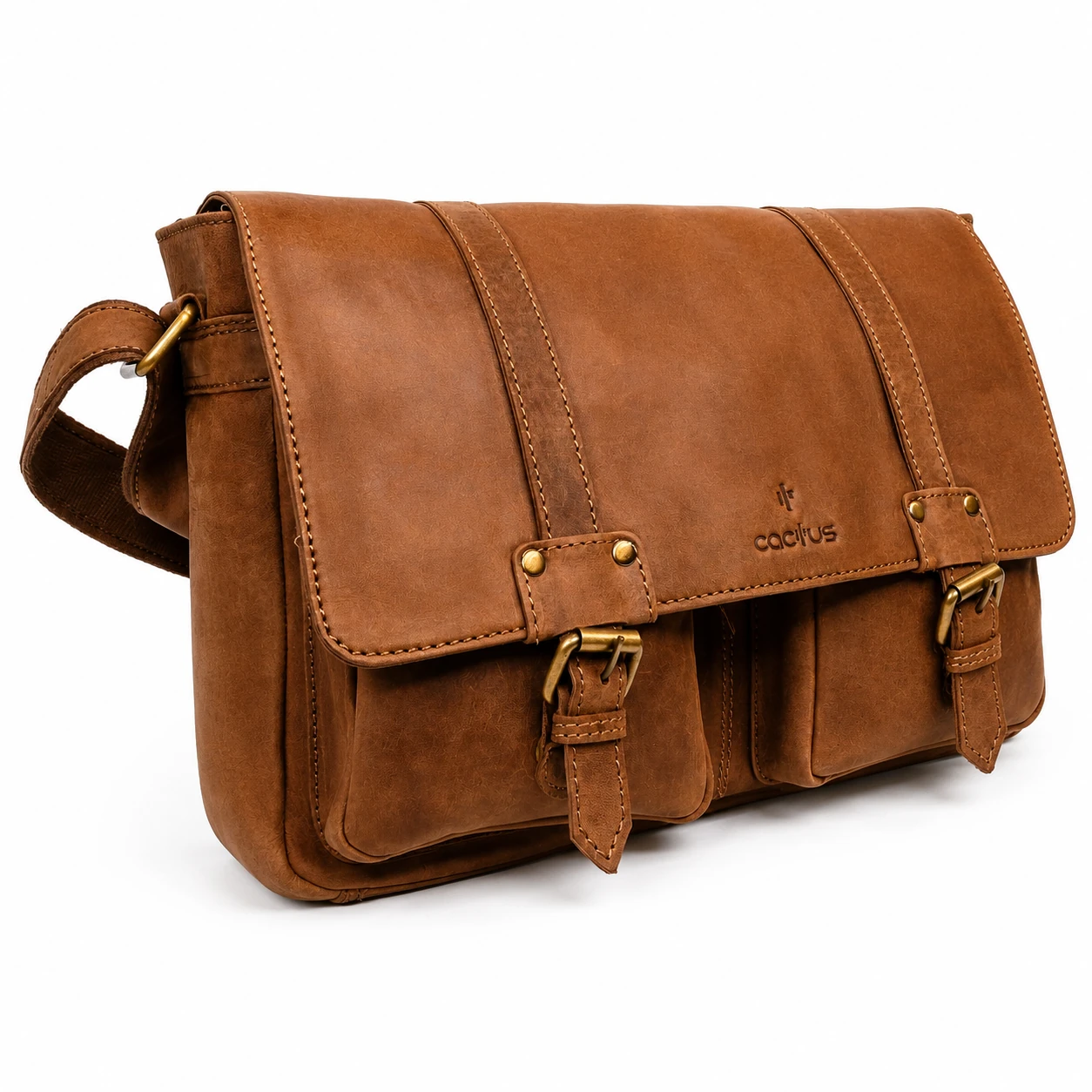
I alternate between a burgundy laptop bag and a tan or brown messenger bag, which I think of as my Friday bag. The burgundy bag is used around four days a week. The tan bag comes out about once a week.
Both have experienced rain, summer heat, commuting and travel. I have not recorded controlled exposure times or carried out laboratory testing. This is a personal account of normal use and what I have observed afterwards.
| Use and observation | Burgundy laptop bag | Tan Friday bag |
|---|---|---|
| Time in use | Approximately two years | Approximately two years |
| Frequency | Four days a week | Once a week |
| Condition reported by DC | Intact; no noticeable changes identified | Minor surface blemishes; still functional |
| Conditions experienced | Rain, summer heat, commuting and travel | Rain, summer heat, commuting and travel |
| Care products applied | None during the period described | None during the period described |
The difference between them is mainly in the small surface blemishes I can see on the tan bag. It still looks stylish to me and remains useful. The burgundy bag has stayed intact, with no noticeable changes to the colour, corners, handles, lining or stitching that I have identified.
About the photographs: These are product images identifying the models discussed, not current photographs of the founder’s two-year-old bags. Condition statements are based on his personal observations.
What I Actually Carry to Work
These bags are not being judged while sitting empty on a shelf. Their main purpose is carrying the things I need for work and the rest of my day.
My usual workday load includes a laptop, office documents, earphones, a mouse, mobile phones, chargers, a small perfume bottle, a water bottle, a lunchbox, visiting cards and a wallet. Depending on the day, cash, coins and glasses come along too.
What I value is how the bags accommodate those belongings without feeling cluttered. I can organise the equipment and personal items rather than treating the bag as one large space into which everything disappears.
That is my packing experience with my own items. Laptop bodies, lunchboxes, water bottles and chargers differ in size, so customers should compare their belongings with the selected bag’s dimensions and layout.
Why Organisation Is Part of Longevity
Longevity is often discussed only in terms of the outside leather. For a work bag, I would also include whether its organisation continues to suit your routine. A bag can remain physically intact and still become frustrating if it no longer accommodates what you carry.
After two years, both of mine remain functional at the things I need them to do. I still have a suitable arrangement for work equipment, documents and personal belongings. That continuing usefulness is a significant part of their value to me.
Before buying, think through your ordinary day rather than an idealised photograph of a laptop and notebook. Include the bulky charger, the lunchbox and the bottle you actually use. Check the internal layout and the opening, then ask the seller any questions that remain.
Cosmetic Blemishes and Functional Problems Are Different
The tan Friday bag has picked up minor blemishes through use. I distinguish those from a failure that stops the bag doing its job. A small surface mark does not, by itself, mean that the handles, lining, closures or compartment layout have failed.
This does not mean every mark should be ignored. A change deserves a closer look when it appears to involve a seam opening, a handle attachment becoming insecure or a closure no longer operating properly.
The useful habit is to describe what you can see and how it affects use. “There is a small surface mark” provides different information from “the strap attachment is coming away”. Photographs can help the seller understand the difference, especially when you are discussing a concern remotely.
A Bag Should Be Judged as a Complete Product
Leather is important, but it is only one part of a finished bag. Threads, lining, handle construction, hardware and zippers all contribute to whether it keeps serving you well.
That is why LeatherKart’s inspections look beyond surface appearance. We examine stitching, handles, fittings, internal finishing and zipper operation after receiving stock. Staff open and close zips repeatedly as part of those checks.
We have also withheld bags with unacceptable stitching and returned them to our manufacturing partners for correction. This does not predict the exact lifespan of every product. It explains why we pay attention to the parts that customers use every day.
For a detailed before-purchase checklist, read our guide to checking leather quality online. Here, the focus is what happens after a bag becomes part of your routine.
What Two Years of Use Can Tell You
Two years gives me meaningful experience of these bags, but there are limits to what I can conclude. I can report my use frequency, contents, exposure and observations. I cannot use two examples to establish a guaranteed lifespan for every bag or every customer.
Nor does the tan bag’s weekly use make it directly comparable with the burgundy bag’s four-day routine. They are different products with different appearances and use patterns. Their condition should be read in that context.
What I can say is that both continue to work well for me. The burgundy bag remains intact in my observation, while the tan bag has minor surface blemishes without losing its everyday function. That is the experience behind this article, rather than an unsupported claim of a ten-year or lifetime result.
Rain and Summer Heat: My Experience and Its Limits
Both bags have encountered wet weather, summer heat, commuting and travel. Those experiences are part of my account, but they should not be read as a waterproof rating or a recommendation to leave leather exposed to harsh conditions.
LeatherKart does not describe these bags as waterproof. If rain is expected, protect your bag and the belongings inside it. Do not assume that a laptop will stay dry simply because it is inside a leather compartment.
Leather Naturally’s care guidance recommends letting wet leather dry naturally, away from direct sunlight, radiators and hairdryers. Follow the care instructions for the particular leather and finish. The practical aim is to deal with moisture sensibly, rather than use my experience as a reason to test the bag in heavy rain.
I Have Not Used Care Products Yet
I have not applied leather cleaning or conditioning products to either bag during the period discussed. I did not feel they needed treatment, based on how they looked and performed.
That is a description of my own routine, not advice to leave every leather bag untreated for two years. Other finishes, usage patterns and environments may call for different care. Your bag’s instructions should guide your decisions.
I would encourage customers to keep an eye on their bags, clean them appropriately and ask for advice when they are unsure about a treatment. Leather Naturally recommends suitable products and testing them first on a small concealed area. A product that changes the appearance of one finish may not be the right choice for another.
Do Not Treat Conditioner as a Repair for Cuts
Light surface scuffs, marks and deeper cuts should not all be described as the same problem. If you cannot tell what you are looking at, ask for advice before applying a product or rubbing the area.
A care product should not be presented as a guaranteed way to mend a cut. In particular, do not expect ordinary conditioning to restore leather fibres that have been cut through. A deeper problem needs an assessment rather than a promise that it will disappear.
For surface care, follow the manufacturer’s instructions and patch-test a suitable product. Avoid repeated aggressive rubbing on a stubborn mark. When contacting LeatherKart about a concern, include a close-up and a wider view so we can understand where the issue sits on the bag.
Pack for Fit, Rather Than Forcing Capacity
One reason my bags remain useful is that their arrangement suits my belongings. That does not mean I recommend forcing every possible item into them. A comfortable fit matters more than reaching the largest load you can squeeze inside.
When packing, check that your laptop sits properly and the main closure operates without being forced. Think about how a lunchbox, bottle or large charger sits alongside it. If you regularly need substantially more space, compare a larger design rather than assuming a small bag should stretch to accommodate it.
Before ordering a laptop bag, measure the closed device and any sleeve you use. Check the usable compartment and opening. Your screen size is a starting point, while the device’s physical dimensions are what you need for a useful fit comparison.
Inspect Your Bag as Part of Ordinary Use
You do not need a complicated inspection programme. Occasionally empty the bag and look at the parts you rely on: handles, strap connections, closures, pockets, seams and lining.
Notice whether anything has changed. A zipper that begins catching the lining, a thread that has become loose or an attachment that looks different is worth discussing before the issue is dismissed or made worse by continued forcing.
Take clear photographs if you need help. Include the whole bag, the affected area and a closer view of the detail. Explain how long you have used it, what happened and whether the issue affects carrying or closing it. Those details make an assessment easier than a single photograph without context.
Think About Value Through Use
For me, value includes the number of workdays a bag continues to support comfortably. A bag I reach for four days a week needs to earn its place through function as well as appearance.
You can consider the same question without assuming any particular lifespan: would you use the layout regularly, would it carry your real load and would you feel comfortable taking it to work? A design that remains useful to you has a different value from one that stays in the cupboard.
Price alone does not answer those questions. Compare material information, construction, fit and after-sales support. Then consider whether the bag suits your own routine. My positive experience is relevant evidence about my two bags, while your purchase should still be based on your requirements.
What LeatherKart’s Warranty Covers
For the bags discussed here, LeatherKart provides a three-year warranty against manufacturing defects in leather and workmanship. The warranty period is a statement of cover, not a prediction that a bag will stop being useful when that period ends.
If you believe there is a manufacturing defect, send us photographs for assessment. Once a manufacturing defect is confirmed, we offer a replacement or, if you prefer, a full refund. We do not provide repairs.
The warranty excludes user-caused damage, including burns, cuts, accidental damage to straps, pull damage, water damage and damage caused by pets. A 30-day change-of-mind return window is also available. Contact the team for the arrangements that apply to your situation rather than assuming every mark or accident falls under warranty.
Frequently Asked Questions
How long should a leather bag last?
There is no single lifespan that applies to every bag. Construction, use, load and care all matter. In my own experience, the two bags discussed here remain functional after approximately two years, with different use frequencies and different cosmetic observations.
Can a leather laptop bag still look good after two years?
My burgundy bag still looks intact to me after around two years of use four days a week. My weekly tan bag has minor blemishes but remains stylish and functional. These are personal observations, rather than a guarantee of another customer’s result.
What do you carry in the bags?
My workday load includes a laptop, documents, earphones, mouse, phones, chargers, a small perfume bottle, water bottle, lunchbox, visiting cards and wallet. Both bags organise my own items well. Check dimensions because other people’s equipment and containers may be larger.
Does a small blemish mean a leather bag is worn out?
A minor surface blemish does not by itself establish that a bag has lost its function. My tan bag has some blemishes but still serves me well. Assess the mark alongside the condition of seams, attachments, closures and lining, and seek advice if concerned.
Are these photographs the bags after two years?
No. The images identify the models I use and are supplied product photographs. I did not have current photographs of my personal bags available when preparing this account. The condition statements come from my own observations and are not a photographic before-and-after comparison.
Have you used conditioner during those two years?
I have not applied cleaning or conditioning products to these two bags during the period described. That is my personal experience, not a universal maintenance schedule. Follow the specific product’s care advice and use suitable treatments, tested on a concealed area first.
Are the bags waterproof because they have been in rain?
No. My experience of rain exposure does not establish waterproofing. Protect the bag and its contents from heavy rain. If leather becomes wet, follow its care instructions and allow it to dry naturally away from direct heat and sunlight.
Will conditioner fix scratches or cuts?
Do not assume that a care product will repair damage. Ask for advice about the specific finish and mark. A light surface scuff and a cut are different issues, and ordinary conditioning should not be expected to restore fibres that have been cut through.
Does frequent use always mean faster failure?
Frequency is only one part of a bag’s use history. My burgundy bag remains intact in my observation despite being used more often than my tan bag. That comparison cannot isolate a cause because the products, finishes and routines differ.
Is a three-year warranty the expected lifespan?
No. A warranty describes the cover offered, rather than setting a replacement date for the bag. LeatherKart’s three-year cover applies to manufacturing defects in leather and workmanship, assessed from photographs. Confirmed defects receive a replacement or full refund; exclusions apply.
What should I do if a seam or handle develops a problem?
Photograph the affected area and contact LeatherKart, explaining what changed and how it affects use. Avoid forcing an insecure attachment or a jammed closure. We assess whether the concern is a manufacturing defect before discussing the applicable remedy.
How do I choose a bag that will remain useful?
Start with your regular contents and journey. Check usable space, laptop fit, organisation, carrying options and closures. Ask about construction and support before buying. For me, both bags remain useful because they continue to accommodate and organise my actual workday belongings.
My Verdict After Two Years
The strongest thing I can say about these bags is that I still use them for their intended purpose. The burgundy bag handles my regular workweek, and the tan Friday bag provides another style without giving up practical organisation.
There are minor blemishes on the tan bag. The burgundy bag remains intact in my observation. Both still carry my work essentials in a way that feels organised, useful and appropriate for my day.
If you are choosing your own bag, start there: what will you carry, how will you travel and what details need to keep working? Explore LeatherKart’s leather laptop bags and everyday leather bags, or contact us to compare the options around your routine.
Sources and scope: The use history and product observations were supplied by Deepanshu Chopra, LeatherKart’s founder, in October 2026. General care guidance draws on Leather Naturally’s Basic Rules for Best Leather Care. This is a personal use account, not a controlled durability test.

