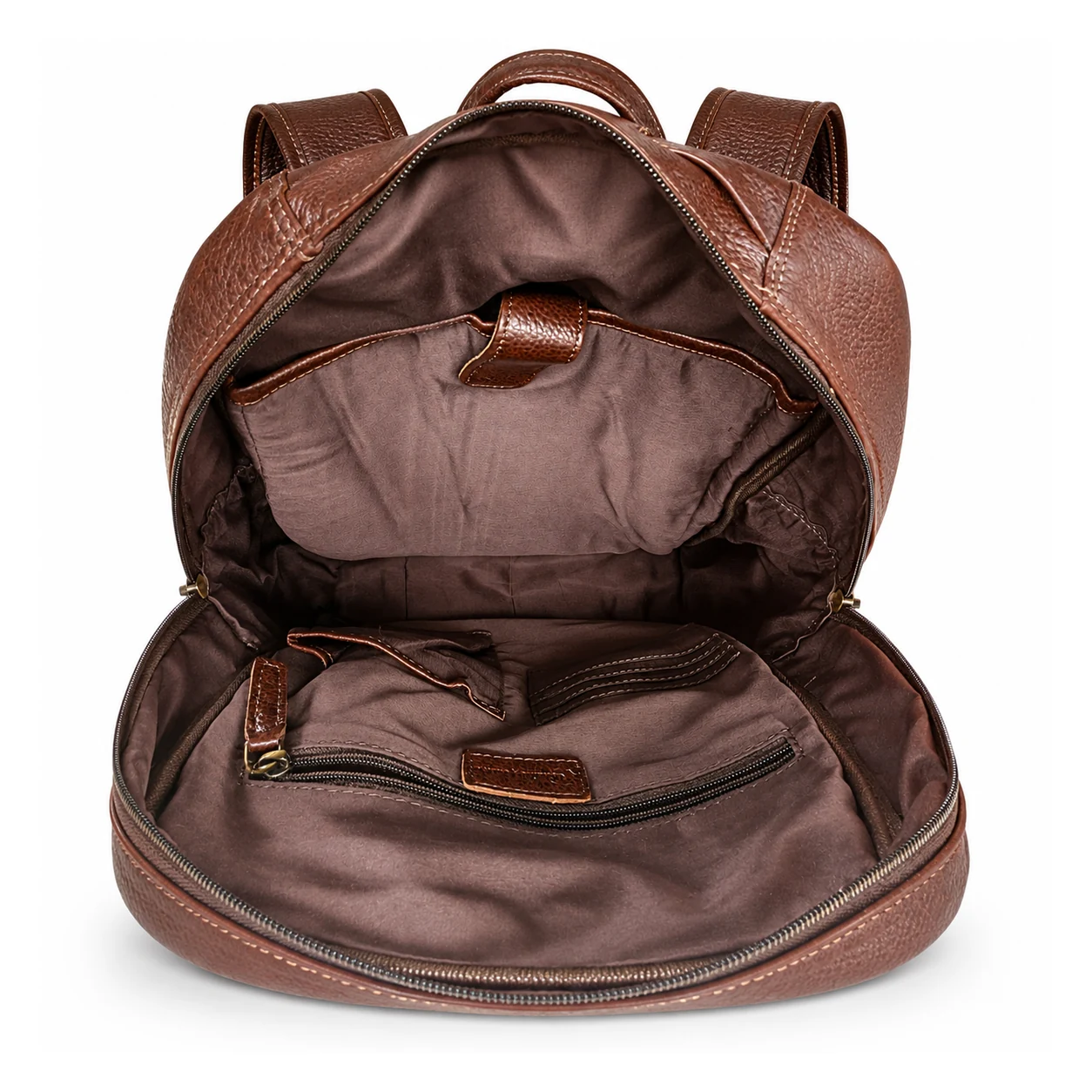
Why the Inside of a Leather Bag Matters
When shopping for a leather bag, the exterior naturally receives most of the attention. Buyers compare colour, grain, handles and hardware, yet the interior lining can be just as important to everyday usability.
A lining protects the reverse side of the outer leather, provides a cleaner interior and can support pockets, compartments and padding. The material selected also affects weight, feel, durability and maintenance.
Cotton and Canvas Linings
Cotton and canvas are popular because they feel natural and can provide a pleasant contrast with leather. Heavier woven fabrics can be durable and breathable while remaining relatively easy to sew into complex interiors.
Light-coloured cotton can make small objects easier to find inside a bag, although it may show stains more readily than darker fabric.
Synthetic Fabric Linings
Polyester and other synthetic textiles are commonly used because they can be lightweight, strong and resistant to everyday abrasion. They are available in many colours and can provide good performance without adding excessive weight.
Quality varies substantially, so buyers should examine the density of the fabric and how securely pockets and seams are attached.
Suede and Microfibre Interiors
Suede can create a luxurious soft interior but may be more difficult to clean. Microfibre materials can imitate a similar soft feel while offering greater uniformity.
Soft linings are particularly useful for jewellery boxes, watch cases and accessories where delicate contents need protection from scratching.
Full Leather Linings
Some premium bags and cases use genuine leather internally. This can create a rich finish and allows the product to age consistently inside and out.
The trade-offs are additional cost and weight. Full leather lining is therefore more common in premium goods or selected sections rather than every everyday bag.
Unlined Leather Bags
Not every bag requires a lining. Thick full-grain or vegetable-tanned leather can sometimes be left exposed internally, particularly in rugged or minimalist designs.
If you are unfamiliar with leather layers, our leather classification guide provides useful background.
What Should Buyers Examine?
Check whether the lining is securely stitched, whether pocket edges are reinforced and whether the material suits what you plan to carry. A laptop bag benefits from padding, while a small handbag may prioritise low weight.
Quality leather goods should be considered as complete constructions. Grain, thickness, stitching, hardware and lining all contribute to how the finished product performs over time.


