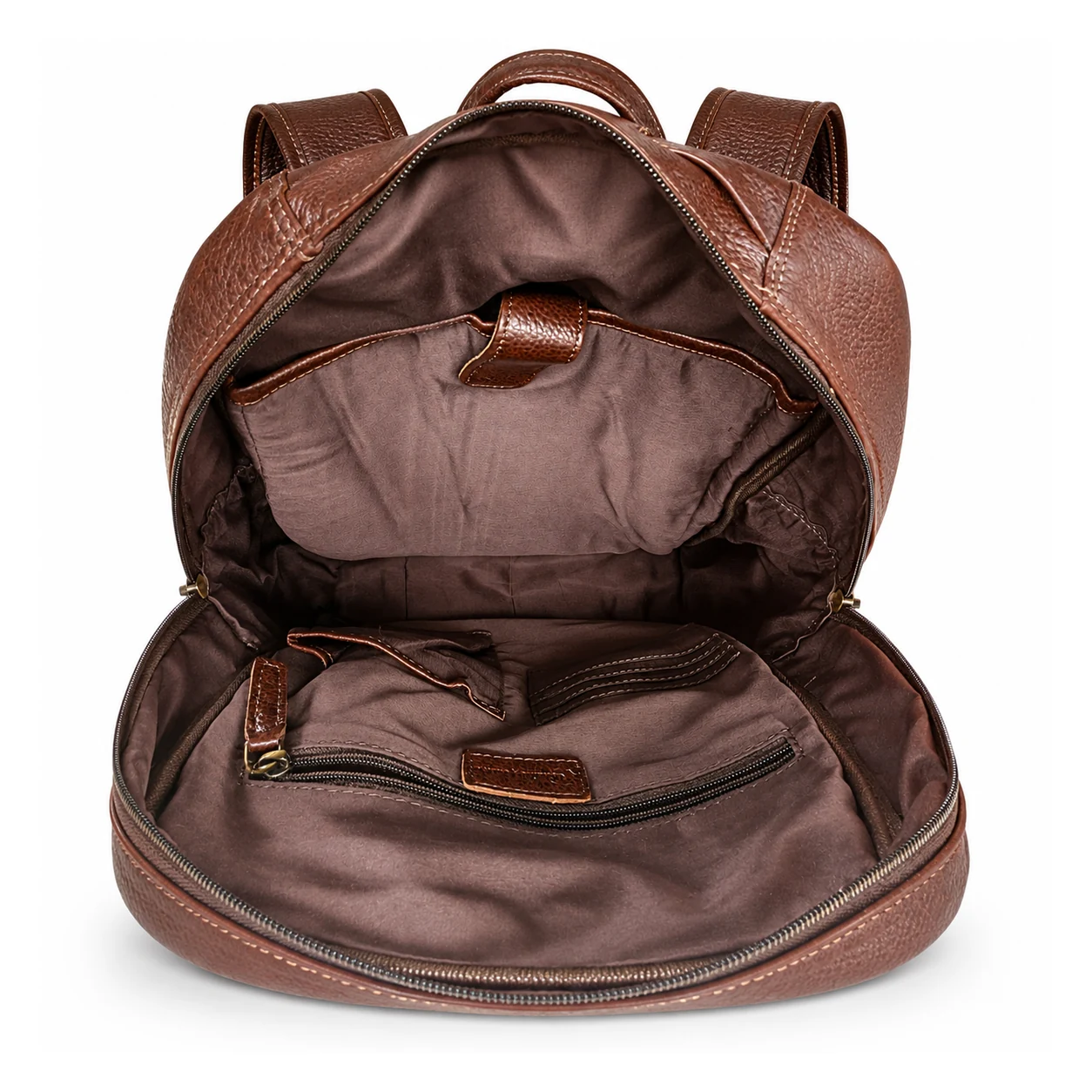
Natural Leather Grain and Imperfections
Perfectly uniform leather may look attractive, but natural animal hide was never perfectly uniform to begin with. Genuine hides contain pores, wrinkles, changes in grain density and sometimes healed marks that reflect the natural structure of the material.
When leather is minimally corrected, some of these features remain visible in the finished product. Rather than automatically representing defects, they can indicate that the natural grain has not been completely concealed.
What Creates Natural Grain?
The grain is the outermost surface of the hide. Its pattern varies according to species, age, body location and individual animal characteristics. Buffalo leather commonly shows a stronger grain than very smooth hides, while goat leather can display a distinctive pebbled appearance.
Explore our guide to leather hide types to learn why different animals produce different leather characteristics.
What Natural Marks Might You See?
Small wrinkles, pores, subtle scars and colour variation may remain visible when the surface receives minimal correction. Their visibility depends heavily on the finishing method.
Aniline leather tends to display natural variation clearly, while pigmentation can create a much more uniform appearance.
Are All Imperfections Acceptable?
No. Natural character should be distinguished from manufacturing defects. Deep cuts, weak areas, uncontrolled cracking, loose finishing and structural damage are different from harmless grain variation.
A quality maker decides where particular areas of hide should be used. Sections carrying heavy structural loads may require stronger leather than purely decorative panels.
Why Full-Grain Leather Shows Character
Full-grain leather retains the original grain surface rather than sanding it away extensively. Natural features can therefore remain visible and develop further depth through patina.
Read our guide to leather classifications for a detailed comparison.
Embossed Grain vs Natural Grain
Manufacturers can emboss leather using patterned plates to create a consistent texture. Pebbled, crocodile and other patterns may therefore be mechanically produced even when the underlying material is genuine leather.
Embossing is not necessarily deceptive; it can simply be a deliberate design choice. Our Leather Texture Explained guide explores the distinction.
For buyers who value authenticity, variation is part of the appeal. Understanding natural grain helps distinguish desirable leather character from genuine quality problems.