Why Does Leather Crack?
Few things are more disappointing than discovering cracks on a favourite leather bag, pair of boots or wallet.
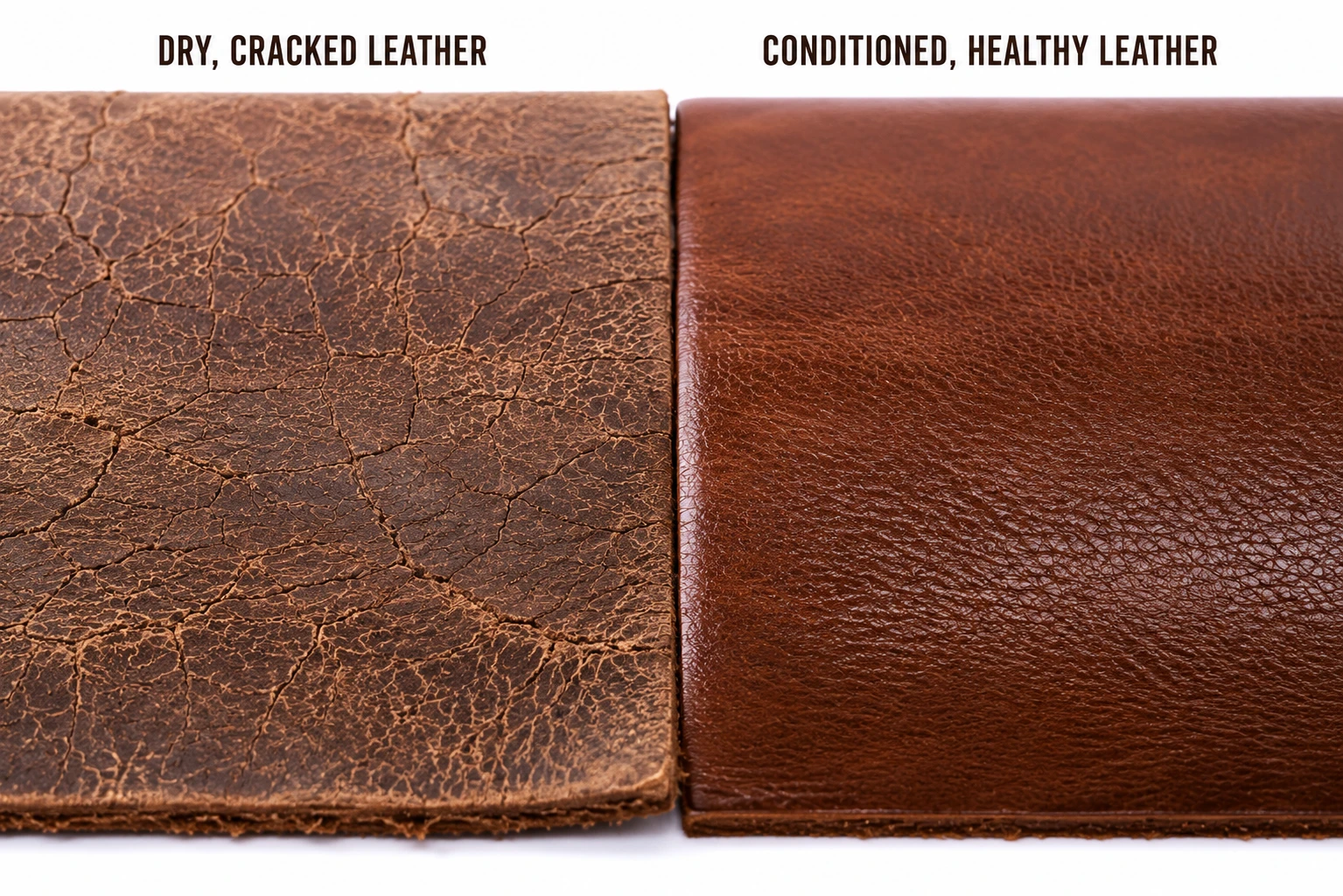
Many Australians assume leather cracks simply because it gets old. In reality, age is rarely the main cause. Most leather cracking occurs because the material loses moisture and flexibility over time.
Leather is a natural material made from animal hide. Just like skin, it needs occasional care to remain soft, supple and healthy. If you are new to leather materials, start with our guide on what genuine leather actually means.
Without proper maintenance, leather can gradually dry out, stiffen and eventually crack.
Why Leather Cracks More Quickly in Australia
Australia's climate can be surprisingly tough on leather products.
Strong sunlight, dry heat, air conditioning and seasonal weather changes all contribute to moisture loss within leather fibres.
In cities such as Melbourne and Adelaide, leather often experiences changing temperatures throughout the year. In Queensland and northern Australia, humidity and heat create different challenges.
Over time, these environmental conditions can weaken leather if it is not properly maintained.
The Most Common Causes of Leather Cracking
1. Lack of Conditioning
The most common cause of cracked leather is a lack of conditioning.
As leather ages, natural oils slowly evaporate. Without replenishment, the material becomes dry and brittle. If your leather already feels stiff, read our guide on how to soften leather the right way.
2. Excessive Sun Exposure
Direct sunlight can dry out leather and accelerate fading.
Leather bags left in parked cars or near windows often show signs of deterioration much faster than properly stored items.
3. Heat and Air Conditioning
Indoor heating and cooling systems reduce moisture in the surrounding air.
Over long periods, this can contribute to leather drying out.
4. Water Damage
Although leather can tolerate occasional moisture, repeated exposure to water can weaken fibres and remove protective oils.
Improper drying after getting wet may also contribute to cracking.
5. Poor Quality Leather
Not all leather is created equal.
Higher-quality leather generally remains flexible longer and responds better to maintenance.
Understanding the differences between leather grades is important, which is why we recommend reading our guide on Full Grain vs Top Grain Leather.
Early Warning Signs of Leather Cracking
Watch for these signs before cracks appear:
- Leather feels stiff or rigid
- Surface appears dull or faded
- Visible dryness around folds
- Small creases becoming more pronounced
- Loss of softness and flexibility
Addressing these issues early can often prevent permanent damage.
If your leather has started to look dull or dry, our guide on how to clean leather products is a good first step before conditioning.
How To Prevent Leather From Cracking
Clean Leather Regularly
Dirt and dust can gradually damage leather surfaces.
Wipe leather with a soft cloth and remove debris before it builds up.
For detailed instructions, see our guide on How To Clean Leather Products.
Condition Leather Periodically
Leather conditioner helps restore moisture and maintain flexibility.
Most leather products benefit from occasional conditioning, particularly in Australia's drier regions.
Regular conditioning also helps leather age more gracefully. This is one reason quality leather often gets better with age.
Store Leather Correctly
Store leather products in a cool, dry location away from direct sunlight.
Avoid plastic bags, which can trap moisture and affect the material.
Allow Wet Leather To Dry Naturally
If leather becomes wet, allow it to dry at room temperature.
Never use hair dryers, heaters or direct heat sources.
Can Cracked Leather Be Repaired?
Minor cracking can sometimes be improved using conditioners, leather creams and restoration products.
However, severe cracks usually indicate permanent fibre damage.
This is why prevention remains far more effective than repair. If you are dealing with peeling rather than cracking, read our guide on how to fix leather product peeling.
Which Leather Types Resist Cracking Best?
Higher-quality leather generally resists cracking more effectively.
Full grain leather often performs particularly well because its natural structure remains largely intact.
If you're unsure about leather types, our guide on What Is Genuine Leather? explains the differences.
You can also compare common leather grades in our guide to types of leather used in bags, boots and wallets.
Leather Care Checklist for Australian Buyers
- Keep leather out of direct sunlight
- Clean regularly
- Condition when required
- Store in a cool, dry location
- Avoid excessive moisture
- Address dryness early
If you are caring for leather boots, handbags or wallets, it helps to understand the leather type first. Our article on how to identify a genuine leather product can help Australian buyers make better care decisions.
Final Thoughts
Leather cracking is usually preventable.
With proper cleaning, sensible storage and occasional conditioning, quality leather bags, boots, wallets and accessories can remain attractive for many years.
At LeatherKart Australia, we encourage customers to view leather care as an investment. A few minutes of maintenance can significantly extend the life of genuine leather products and preserve their appearance for years to come.