
Leather is a natural material used for furniture, accessories and, most importantly, everyday fashion pieces. In today’s market, it’s common for artificial leather to be sold as the real thing, and it can be hard to tell the difference. Genuine leather products are typically made from lambskin, calfskin or cowhide, while faux leather is produced from plastic-based materials. Not sure what you’re looking at? You can also check the difference between PU and real leather. Below are nine simple checks that help you identify genuine leather versus faux leather before you buy.
These material checks are useful when choosing everyday accessories, too. Explore our genuine leather iPhone cases, and review the listed materials and phone compatibility before choosing your case.
Differences Between Real and Fake Leather Products
Here are some key differences between genuine leather and synthetic leather. These points are helpful if you’re investing in a quality leather product and want to be confident it’s the real thing.
| Feature | Product Made from Real Leather | Product Made from Fake Leather |
| Material | Genuine animal hide | Plastic or polyurethane-based material |
| Durability | Long-lasting and durable with proper care | Less durable and more likely to crack or peel over time |
| Texture | Natural grain pattern and unique texture | Uniform texture with little to no variation |
| Breathability | More breathable and comfortable to wear | Less breathable; can feel hot and sticky |
| Price | More expensive than faux leather | Generally cheaper |
| Sustainability | Can be more sustainable when responsibly sourced | Often less eco-friendly due to synthetic materials |
Now let’s look at practical tests you can use to check whether a leather product is real or fake.
1. Check the Price Tag

Price is often the first giveaway. A real leather product usually costs significantly more than a synthetic alternative. If the price seems too good to be true, it probably is. Use price together with the other tests below to confirm whether the leather is genuine.
2. Touch and Feel
High-quality leather feels smooth, supple and slightly warm to the touch. Faux leather, on the other hand, often feels very smooth, plastic-like or cold. If you want to compare real and fake leather, visit a reputable store that stocks both types so you can feel the difference side by side. Also read: How long will a leather product last?
3. Check the Texture Pattern

Faux leather is machine-made, so the grain pattern usually looks perfectly uniform. Real leather has a natural, uneven grain with small variations and imperfections across the surface. A genuine leather product for women or men will often show subtle creases, wrinkles and grain variations because it is made from real hide.
4. Smell the Leather

Smell is a powerful indicator. Real leather has a rich, natural, slightly earthy smell that many people love. Faux leather generally smells like chemicals or plastic. Once you’ve experienced the scent of genuine leather, it becomes much easier to recognise in the future.
5. Water Absorbance Test

Real leather contains tiny pores that allow it to absorb a small amount of moisture. Place one or two drops of water on an inconspicuous area: if the leather slowly absorbs the water and darkens slightly, it’s likely genuine. If the water beads and stays on the surface, it’s probably synthetic. In a retail store, ask if they have a small sample piece you can test rather than using the main product.
6. Check the Edges
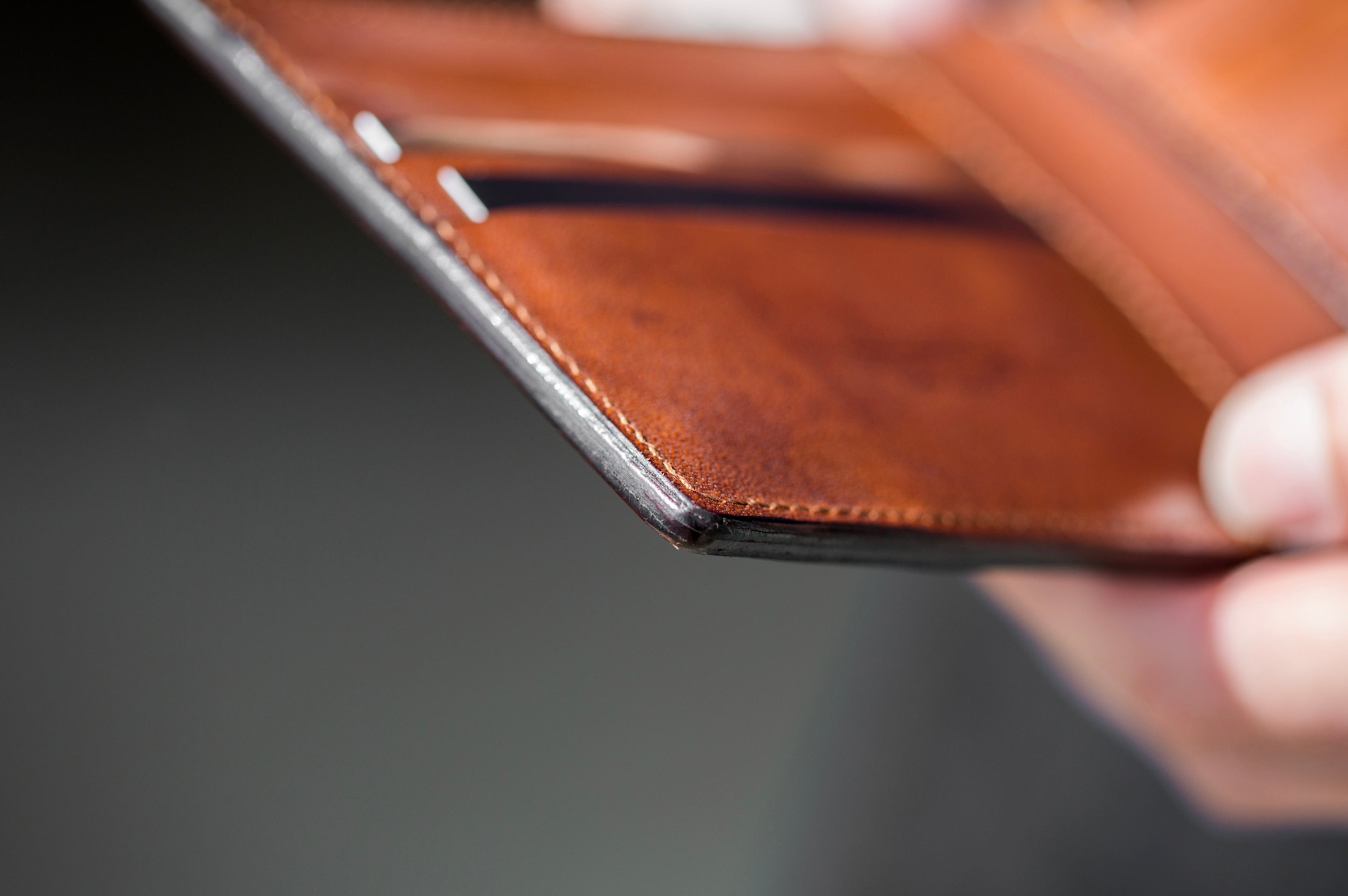
The edges of genuine leather products usually look slightly rough, fibrous or rounded, similar to a natural cut. Faux leather edges often appear smooth, flat and very clean because they’re made from layered synthetic material. Some manufacturers finish real leather edges to look tidier, but you can still usually see subtle natural fibres.
7. Fire Test (Use with Caution)

This test should only be done at home and only on a small, hidden area. Briefly expose the edge of the leather to a low flame. Faux leather will usually melt and give off a strong burning-plastic smell. Real leather may darken slightly and smell more like burnt hair than plastic. Because this test can damage the product, most people are better off relying on the other checks instead.
8. Bend Comparison

When you gently bend real leather, you’ll see natural changes in colour and the grain pattern. The leather flexes and forms small creases that look organic. Faux leather tends to wrinkle in a more rigid, mechanical way and may show cracks or stretch marks over time, rather than soft creasing.
9. Weight Check
Real leather is generally heavier than synthetic leather. Lambskin and cowhide products often feel solid and substantial in the hand, while faux leather pieces can feel noticeably lighter. Combined with the other checks above, weight can be another useful clue.
Conclusion
These simple checks make it much easier to tell the difference between real and fake leather. In short, genuine leather is more durable, comfortable and long-lasting, and it usually comes at a higher price point. Faux leather can look good at first but often wears out more quickly. Real leather is a long-term investment that, with the right care, can last for many years. Check out our best-selling leather collection here.
Frequently Asked Questions (FAQs)
What should I look for when buying a leather product?
Focus on the type of leather, the quality of the grain and the overall construction. Check the hardware (snaps, buttons, zips) and the inner lining, as these affect comfort and warmth as well as durability.
How can I tell the quality of leather?
Even as a beginner, you can feel the difference. Good leather has a soft, natural grain and a rich feel, while cheaper leather or synthetics often feel stiff or overly smooth. Handling lots of different leather pieces over time will train your eye and touch.
How much is a real leather men’s jacket worth?
A good quality leather jacket can range from around $200 to $2,000, depending on the leather type, craftsmanship and brand. A higher price doesn’t always guarantee better quality, but extremely cheap “leather” is usually a red flag.
How do I spot fake leather quickly?
Look at the grain pattern, feel the surface and check the smell. You can also try a small water-drop test on an off-cut if possible. Real leather absorbs water slowly, while faux leather keeps it on the surface.
Are expensive leather products worth it?
Premium leather products made from lambskin, calfskin or cowhide can absolutely be worth the price. They age beautifully, develop character over time and, with proper care, can last for many years.
How do you break in a leather jacket?
The best way is to wear it regularly. Over time, the jacket will soften and mould to your body shape. If it feels a little stiff at first, don’t worry – that’s normal for genuine leather and part of the break-in process.


